A Late-Winter Garden Walk for Signs of Change
A late-winter garden walk helps you spot local changes in buds, stems and soil, then keep useful notes without rushing into unnecessary garden jobs.
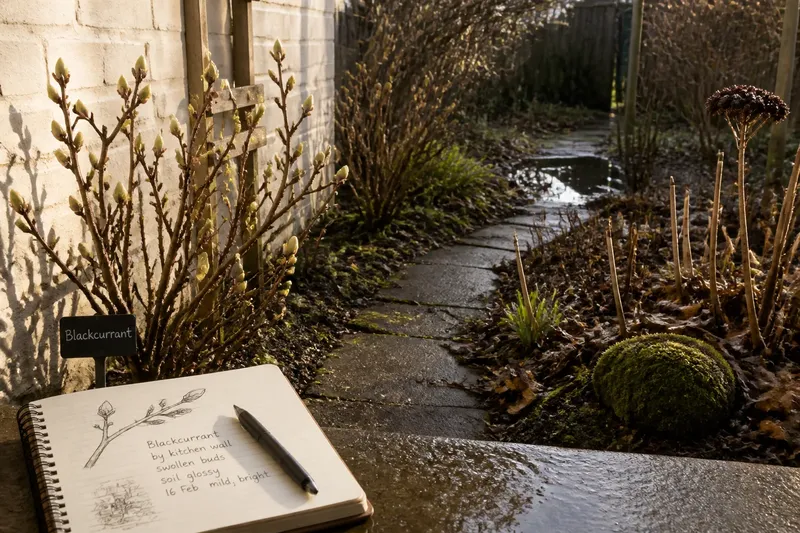
A late-winter garden walk can begin at the back step, where a damp paving slab meets a strip of soil. A late-winter garden walk is less about finding the first flower than noticing how different places are changing at different rates. A notebook or phone is enough to record what catches your eye.
Take a route past a sheltered wall, a shrub, an old border and a damp corner. Note the place as well as the sign: a bud beside a sunny wall says little about a plant in an exposed bed. Keep the walk separate from tidying, so observations do not become jobs by default.
Start at a sheltered wall
Begin beside a south- or west-facing wall, if there is one. Look for swelling buds, fresh growth at the base of a climber, or weeds in cracks. Compare the wall-side plant with the same kind farther from the building, if available. The difference may reflect shelter, shade or how much rain reaches the soil.
Write down the plant and position, such as “blackcurrant by the kitchen wall”. If its name is uncertain, describe its buds and branching rather than guessing. A useful note gives you a way to find the same subject again.
Look closely at buds without disturbing them
Choose a deciduous shrub or small tree and inspect several buds along one branch. Note their shape, colour and whether they remain tight or show green between their scales. Take a photograph from the same side, or sketch the branch and mark the spot. A close view records the bud; a wider view captures its setting.
Imagine a hazel beside a fence with plump buds and another in an exposed corner with tight buds. Record both positions and revisit them after the weather changes. The result is a local comparison, not a prediction for every hazel nearby.
Read old stems before clearing the border
Look over last year’s perennial stems before cutting them back. Their arrangement can show where plants stood, and seed heads may still offer shelter to small creatures. Check for new shoots at the base and buds on plants that flower on older growth. A hollow-looking stem may be occupied, but appearance alone cannot tell you.
If labels have vanished, note a location such as “three stems beside the stone path”. Mark nearby ground without tying anything tightly around a living stem. If you decide to cut, consider each plant separately rather than treating the whole border as one task.
Observe the soil surface at the bed edge
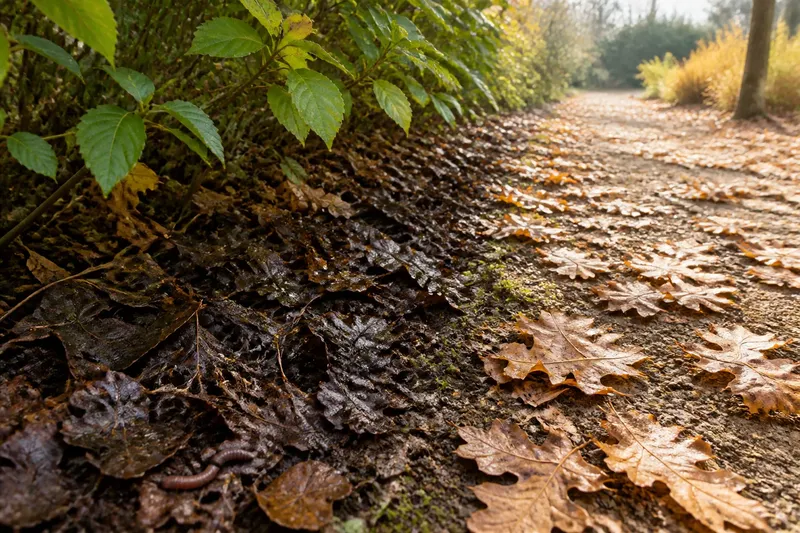
Compare the surface beneath a shrub with an open patch nearby. Look for crust, loose crumbs, fine cracks, moss, fallen leaves and seedlings. Notice whether the soil looks glossy with moisture or dull and dry. These are surface clues, not an invitation to dig.
Use a path or stepping stone to avoid compressing wet ground. A boot can leave a mark that lasts beyond the visit. The surface is like a book cover: it points to what may be inside without requiring you to tear it open.
Mark the boundary of a damp patch
Visit the low point, the ground near a downpipe, or another patch that holds water after rain. Look for standing water, dark soil, flattened leaves and shoots at the edge. Note where wet ground begins and whether its boundary follows a slope, paving or a drain.
Do not assume the patch needs draining or that every plant there is struggling. Some plants suit moist ground; others may show stress for a different reason. If water collects around a building or causes concern, ask a relevant drainage professional to assess it.
Scan open ground for small growth
Check a lawn edge, gravel strip or unplanted bed for small leaves and flowers. Record where they appear rather than pulling them up immediately. Growth beside a wall, under a tree or on disturbed soil may reflect different conditions.
If a plant is unfamiliar, leave its identity open in your notes. Return when it has more leaves or consult a reliable local plant guide. A photograph with a fixed landmark, such as a path joint or fence post, makes the spot easier to find again.
What should you record on the walk?
Which plant is easiest to follow?
Choose a plant that is easy to find and has a visible feature, such as buds on a labelled shrub. Record its position and the feature you are watching, so a later visit can focus on the same detail.
When should you return?
Return when the weather has changed enough to make another look useful, rather than following a fixed schedule. A spell of mild, bright weather may leave different signs from cold rain.
What belongs in a useful note?
Write the place, the plant or surface, what you see and a brief description of recent conditions. Keep observations separate from guesses, especially when a plant or the cause of a wet patch is unclear.
Should you tidy as you go?
Keep observation and tidying as separate decisions. If you spot a possible job, note it and consider the plant, the soil and any shelter the material may provide before acting.
Choose a sign that will be easy to find again
End at the step or gate and pick one sign to revisit: a swelling bud, a shoot at the bed edge or the outline of a damp patch. Decide what visible change you would recognise, such as a bud opening or a new leaf appearing, without assigning it a deadline.
- Check whether the plant has a label; if it does, record its name, and if it does not, describe its leaves and position instead.
- Check whether the bud is tight or swelling; if it is changing, photograph it from the same side, and if not, note its current shape for later comparison.
- Check whether old stems have new shoots at their base; if they do, leave those stems in place for now, and if they do not, assess each plant before cutting.
- Check whether the soil surface is glossy or dull; if it is glossy, stay on the path, and if it is dull, observe the surface without assuming deeper soil is dry.
- Check where standing water begins; if it is confined to a garden hollow, mark its boundary, and if it collects near a building or causes concern, seek a drainage professional’s advice.
- Check whether an unfamiliar seedling has enough features to identify; if it does not, photograph it beside a fixed landmark, and if it does, confirm the identification with a reliable local guide before removing it.
Imagine your notes begin with a hypothetical visit to the back step: a labelled blackcurrant beside the wall has swollen buds, the same shrub in an open corner has tight buds, and the path-side soil is glossy. First, record both shrub positions and photograph the buds from the same side. Next, note the soil’s location and stay on the paving rather than walking across it. Then select the wall-side buds as the easiest sign to relocate, while keeping the open shrub as a comparison. The resulting decision is to observe again after a change in weather, not to prune either shrub or treat the whole garden as ready for spring.
Keep the record brief: a date, a place and one plain observation can be enough. On your next late-winter garden walk, follow the same route only where it helps you relocate a particular plant or patch; the useful work is choosing a sign you can identify and act on thoughtfully. If care depends on a plant’s identity or local conditions, check its label or reliable grower’s guidance before making a change.