What Happens Under a Layer of Fallen Leaves?
Fallen leaves soften, fragment and blend into the garden floor. Learn to read those changes and decide where litter should stay or be moved.
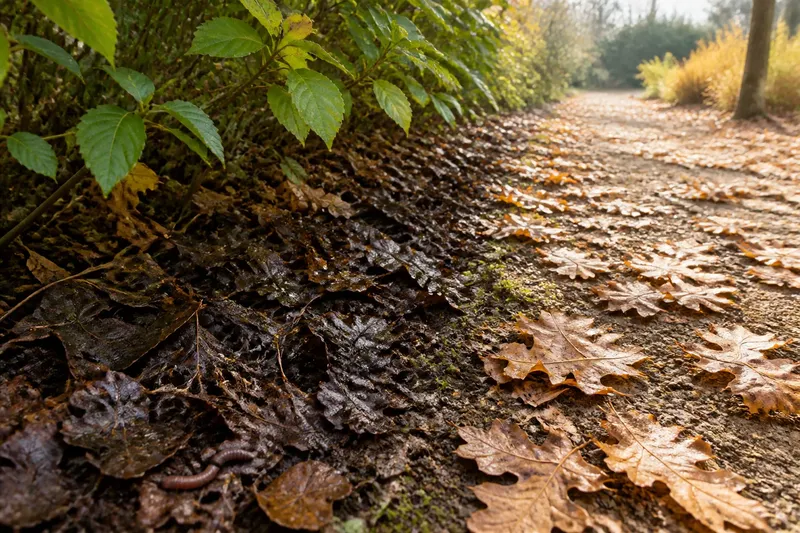
After rain, fallen leaves beneath a hedge lie flat and dark, while oak leaves on the path still crackle underfoot. Fallen leaves are changing at different rates, and their texture offers a useful view of the small processes at work in the soil.
Leaf litter breaks down unevenly
A leaf does not simply vanish. Its tissues soften, tear and break into smaller pieces. Fungi and other decomposers use parts of the material, while small soil animals fragment and move it. Gradually, the remains mix with mineral soil and other organic matter.
There is no tidy sequence. A leaf may be ragged at the edge but firm in the middle. Beneath a dry top layer, a lower leaf may already be soft. The garden floor is a patchwork of conditions, not a compost heap running to schedule.
At first, a leaf keeps its outline, veins and colour, though rain may make it translucent or darken it. Later, it becomes limp and tears readily. Eventually, fragments lose their shape among soil crumbs and other plant remains.
Fungi and small animals alter leaves in different ways
Fungi grow through dead leaves as fine threads, drawing on compounds in the plant tissue. Growth may appear as a pale film or darker staining, but much fungal activity is too fine to see. A visible thread is only one small part of a larger community.
Earthworms, woodlice, millipedes, springtails and other small animals feed on or shelter among litter. Some graze on fungi or softened plant matter; others shred leaves or carry fragments into gaps in the soil. The smaller pieces are easier for other decomposers to use. Earthworm casts contain material that has passed through the animal and is mixed with mineral particles and organic remains.
These activities overlap. Fungi can soften a leaf, making it easier for an animal to tear. Shredding exposes more surface to moisture and decomposers. A handful of litter may hold intact leaves, fragments, fungal threads, animal droppings and bits of soil at once.
Moisture, air and leaf structure affect the change
Moisture helps leaves soften and supports many decomposers. In dry weather, litter may stay crisp and change slowly; after steady rain, it often becomes pliable. Permanently waterlogged material behaves differently because air is limited. Damp litter is not the same as standing water.
Air matters because many decomposers use oxygen. A compacted mat can stay wet while allowing little air through its lower layers. Loose leaves have gaps for air and small animals. Litter under shrubs may hold moisture and remain sheltered, while leaves on paving dry quickly and blow away.
Leaf construction matters too. Thin, soft leaves often lose their shape sooner than thick, leathery ones. Waxy surfaces, tough veins and woody stalks may persist after delicate tissue has weakened. Even leaves from one plant can change differently if one lands in a moist hollow and another on a dry path.
Say you have two patches with similar fallen leaves: one beneath a sheltered hazel and one at an exposed path edge. After rain, the hazel patch is damp and protected, while the path edge dries quickly. If you check both, you may find softer, darker leaves beneath the hazel and brittle or scattered leaves by the path. The difference points to shelter and moisture as possible influences; it does not establish which patch has more decomposers.
Texture gives clues about leaf litter change
A gentle touch can help distinguish stages. Crisp leaves retain much of their structure; limp leaves have taken up moisture and begun to weaken; fragments suggest physical breakdown. Dark, fine material is more blended with the soil. Colour alone is less useful, since wet leaves darken before they have decomposed far.
Look at the surface and beneath it. Note whether leaves remain whole, whether their edges are ragged and whether fine particles cling underneath. If you lift a small section, check for dampness, visible fungal threads or tiny animals, then replace it. There is no need to turn over the whole layer.
A leaf changing underfoot is a little like a paper bag at its folds: it creases, softens and eventually tears. Leaves follow a less uniform path, but the comparison helps explain how something can remain recognisable while losing strength.
- If leaves are soft and the bed is suitable, leave them in place; if they press against plant crowns, move them clear of the crowns.
- If litter is loose and damp rather than waterlogged, leave the surface open to air; if it forms a compacted, sodden mat, loosen or remove some material.
- If leaves remain crisp after dry weather, check the layer beneath before judging the whole patch; if that layer is also dry, leave it or move it to a sheltered bed where litter is appropriate.
- If leaves on a path are slippery or obstruct access, clear them from the walking surface; if the area is a bed rather than a path, assess the plants and leave suitable litter.
- If a drain is covered by leaves, clear the opening; if it is unobstructed, leave nearby litter where it does not create a blockage.
- If a leaf retains a tough, waxy surface, expect it to remain recognisable longer than nearby thin leaves; if it is already soft and fragmented, leave it to continue breaking down where suitable.
Where should fallen leaves stay, and what should you check?
Should every fallen leaf stay in place?
No. Leaves can remain under trees, shrubs and suitable beds, while paths, drains and vulnerable plants may need clearing. Where litter is unsuitable, collect it for a leaf-mould pile rather than sending it to waste.
How can you tell whether leaves are breaking down?
Look for softening, torn edges and small fragments mixed with darker material. Check beneath the surface too, since crisp leaves can cover a damp, more altered layer.
Do all leaves decompose at the same pace?
No. Thin leaves tend to lose their shape more readily than tough, waxy ones, and moisture and shelter also affect the process. Comparing similar leaves in different spots can help distinguish these influences.
Should leaf litter be dug into the soil?
Usually there is no need to bury it just to make it disappear. Suitable litter can break down on the surface; a separate leaf-mould pile is easier to manage if you want material for later use.
Choose a suitable place for the leaf layer
Leaf litter can shelter small organisms and gradually add organic material to soil, but its position matters. A deep, wet layer pressed against plant crowns can keep them damp, and leaves on paving can become slippery. Clear crowns and walking surfaces, and follow plant-care guidance where it calls for a different approach.
For a useful record, pick one patch and note what changes after rain and during a dry spell: whether leaves remain intact, where fragments collect and whether the layer is damp or compacted. That record can help you decide what to leave and what to move, without mistaking a dark leaf for a finished one.