How the Garden Rain Barrel Became the Water Butt
Rain barrel history explains how familiar vessels became planned water butts, and how to choose a useful place for stored roof water in your garden.
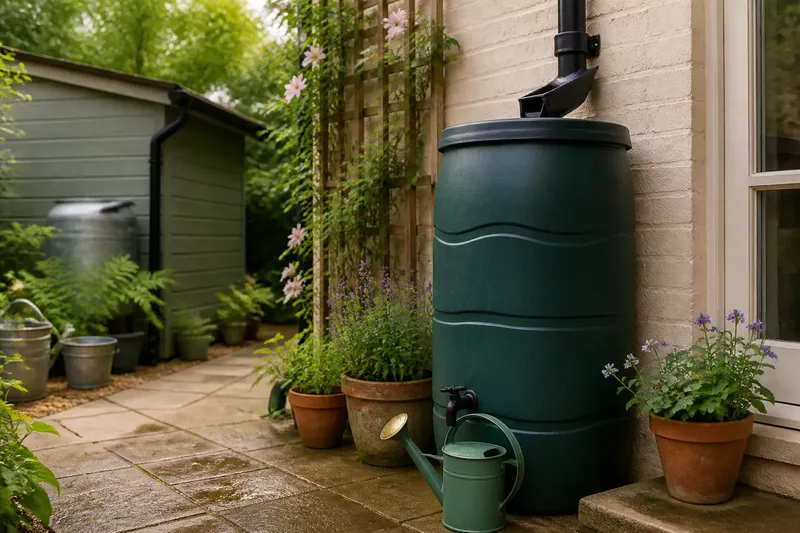
A wooden barrel beneath a kitchen downpipe is an uncomplicated sight: rain runs in, and a watering can comes out. Rain barrel history is less a neat march from wood to plastic than a story of familiar vessels, changing materials and household choices about where water should be kept.
Rain storage began with a familiar vessel
A barrel was already a recognisable storage container, made by coopers for liquids. It could be put beneath a roof edge and used to catch runoff without requiring a purpose-built garden system. The arrangement was simple: the roof supplied the water, the vessel held it, and someone carried it where it was needed.
That description is more useful than a sweeping claim about when every household adopted rain storage. Practices varied with local buildings, available materials and access to other water. A barrel near a kitchen garden made practical sense if its water was wanted there; a container farther away could mean more carrying.
Wooden barrels also had limits. Their staves and joints needed to remain sound, and a vessel of a given size held only so much. They were useful containers pressed into garden service, not necessarily components designed to manage all the runoff from a roof.
Metal tanks made the store look more deliberate
Metal containers, including galvanised steel tanks and drums, offered another form of storage. Their regular shapes could sit against a wall or beside a shed, and they looked more like equipment than a repurposed household cask. Without a date or place, it is safer to describe this as an available alternative than as a universal historical turning point.
The material alone did not decide how useful a store would be. A tank placed close to a working area made it easier to fill a can and return to the plants; one hidden behind an outbuilding could be less convenient. The container’s position connected roof, path and garden routine.
Moulded plastic encouraged planned placement
Moulded plastic water butts are available in shapes intended for different garden spaces, from narrow containers beside a wall to larger stores by an outbuilding. Their lighter construction can make them easier to handle than a bulky vessel, although a filled container still needs a stable, suitable position.
A modern butt is often connected to a downpipe through a diverter. That makes the roof, gutter, connection and container part of one arrangement, rather than treating the vessel as an object placed wherever there is room. A slim butt beside a passage is a little like a shelf fitted to a corner: the shape helps, but access still matters.
This account describes a change in design and domestic use, not a dated sequence in which one material simply replaced another. Wooden barrels, metal tanks and plastic butts can all be found in different settings. The more defensible distinction is that many contemporary products are designed to connect with household drainage and fit particular spaces.
Choose a position by tracing the water and the route
Start by checking which downpipe could feed the container, whether a suitable diverter can be fitted, and where the stored water will be used. Then consider the ground, access to the outlet and any need to keep the container out of a path. Follow the manufacturer’s installation guidance, and ask a qualified installer if the connection or support is uncertain.
- Check whether a downpipe is near the intended position. If a compatible connection is possible, consider that spot; if not, choose another downpipe or a different storage arrangement.
- Check whether the base is firm and level. If it is suitable for the filled container, proceed with the planned position; if it is uneven or weak, choose a more stable location or obtain advice before installation.
- Check whether a watering can can reach the outlet. If it fits comfortably, keep the access; if not, reposition the butt or choose a model with a more suitable outlet arrangement.
- Check whether the route to the plants is clear. If it is straightforward, the position may suit regular use; if it crosses a busy doorway or narrow passage, move the store or select another route.
- Check whether a trellis or planting would obstruct the outlet or lid. If access remains clear, screening may be practical; if it blocks maintenance, leave the container exposed or use less obstructive screening.
- Check whether the selected container suits the available space and downpipe connection. If both fit, continue with the installation plan; if either does not, choose a different shape or position rather than forcing the fit.
Say you have a small patio, a shed roof, and pots beside the back door. In this invented situation, the shed downpipe is available, but the pots are at the house and the path between them crosses the patio. You check the shed-side position and find that filling a can there would mean carrying it across that route; you then inspect the house downpipe and confirm that a compatible diverter and a firm, level base are available near the pots. You choose the house-side position, leaving the outlet accessible. The expected result is a shorter watering route, while the trade-off is that the butt is more visible beside the house.
What do gardeners ask about rain barrels and water butts?
What is the difference between a rain barrel and a water butt?
Rain barrel often describes a barrel-shaped container for collected rainwater, while water butt is the usual British term for a domestic garden store. The terms overlap, though a modern butt commonly connects to a downpipe.
Why are water butts made in different shapes?
Different shapes can suit different spaces, such as a narrow passage or the side of a shed. The shape still needs to fit the downpipe connection and leave the outlet accessible.
Where should a garden water butt sit?
Choose a position near a suitable downpipe, on a firm and level base, with practical access to the outlet. The route from the store to the plants matters too.
Can a water butt replace all garden watering?
No single store should be assumed to supply every garden’s needs through every spell of weather. Treat it as a local reserve when collected water is available, rather than as the garden’s only source.
Material matters less than a workable arrangement
Rain barrel history can be told cautiously: household vessels were used to keep roof water close at hand, and later containers offered different shapes and ways to connect with drainage. Without dates or local records, a broad claim that one material replaced another would say more than the evidence here supports.
When considering a rain barrel or water butt, trace the water from roof to outlet, then consider the route to the plants. A store that is reachable, stable and compatible with its downpipe is more likely to become part of ordinary garden work than one chosen solely because it disappears behind the shed.